Butiama Bed & Breakfast

Butiama Bed & Breakfast
Showing posts with label Butiama. Show all posts

Wednesday, 2 August 2017

Butiama's image of the day


During rare moments a few times every year weather patterns over Butiama produce colourful images. It begins in the late afternoon with a dark rain cloud that hovers and moves slowly from a northerly direction towards the south. The cloud covers the sun, and a period of light rainfall begins, seen on the right edge of the photo.

At a certain point, just before sunset, the sun drops below the cloud cover and releases a bright hue of golden orange sunlight before sinking below the horizon.

We turn a page on another episode of nature and wait for the next memorable sunset.

Sunday, 21 August 2016

Nyerere's Butiama straggles with district status

How we remember the good old times when Butiama retained the character of a village! The new reality struck home recently after I strained my ankle, having fallen off my bicycle.

Remember the good old days when, if hurt, you could receive medical attention in hospital by obtaining the Police Form 3 (PF3) and then proceeding to hospital for treatment? The law has apparently received a minor, critical, change.

I was told that the current procedure for issuing the form would require police to file a case against me before I get the treatment. The police officer explained his predicament (and mine) and asked aloud: "Now what can we charge with you?"

I almost offered the following suggestion: "Riding a bicycle in a reckless manner, with total disregard for my own safety and consequently injuring myself." But I thought it wise not to tempt him.

But he was helpful. He told me to go to the hospital and explain to the doctor that I hurt myself while cycling and ask the doctor to provide treatment. I did, and the doctor accepted my explanation.

Mwalimu Nyerere said, a long time ago, that residents of Butiama should remain residents of a village. The government had other ideas and decided that Butiama should become a district. This new procedure for processing the PF3 form probably has nothing to do with Butima having being designated a district, but it is likely that we are at the beginning of the end of village life as we know it.
Mwalimu Nyerere rides a bicycle
Mwalimu Nyerere rides a bicycle.
The era of falling of a bicycle and ending up in court for reckless cycling has arrived.

Wednesday, 19 November 2014

New monkey species discovered in Butiama

The only primates I have seen in Butiama are baboons and velvet monkeys. A few years ago, I caught a glimpse of a monkey I had never seen in Butiama which disappeared into the nearby forest as soon as it saw me.


A few days ago I saw the monkey again and managed to photograph it.


It has side burns and has a thick fur and a long tail. I do not recall seeing this species anywhere except perhaps in the forest area on the slopes of Mt. Kilimanjaro where a similar species is found.

Friday, 15 November 2013

Ross Methven: Ironman cyclist from Edinburgh to Cape Town

By the time he reached Butiama on 14th July 2013, Ross Methven had cycled through 12 countries and covered some 15,000 kilometres. He is on his way to Cape Town, South Africa, and I am informed he is in Botswana now.

Why? That was the first question I had in mind when I heard from Dr. Thomas Molony of Ross' epic voyage that began in Scotland in January 2013. Ross is raising money for the United Nations Fund for Children (UNICEF).
***********************************
If you want to donate to Ross' cause please follow this link:
***********************************
He entered Tanzania from Kenya through the Namanga border post and rode to Arusha. From Arusha he initially planned to ride south towards Babati to Dodoma, then to Iringa and to the Malawian border. That was before I told him I would accompany him to Dodoma if he chose to ride from Butiama through Mwanza and to Dodoma through Shinyanga. He did and I serviced my mountain bike and accompanied him to Dodoma between July and August. Read about our ride to Dodoma here:


On our way to Ukerewe island, curious children gather around Ross' camera to view their photos.
While resting in Butiama I asked him a few questions:

Q: Are you normally a physically active person?
A: I played rugby a lot while in Scotland. But when I moved to work in London my lifestyle changed. I had long working hours and was not as active. When I started cycling I was pretty unfit and overweight. Experienced cyclists say it normally takes a person 2-3 months of continuous cycling to become bike fit.

Q: What has been your biggest surprise?
A: The unexpected generosity of people I come across. In Albania, people don't accept money for coffee or water.

Q: When do you expect to reach Cape Town?
A: At the end of this year, around Christmas.

Q: Give me some vital statistics of what you have done so far.
A: I have cycled 80 days until now. The longest I have cycled is 88 miles (140.8 kilometres). The coldest day was 12 Celsius, the hottest 29 Celsius. The fastest I have cycled is 48 MPH (76.8 KPH). The longest time without washing was 4 nights. I drink about 8 litres of water each day.

Ross carries all necessary items on his bicycle: tent, food, clothing, water, and spares.

Q: How much total weight do you carry?
A: When I left Edinburgh the total weight, including myself, was 150kgs. I weighed 85kgs; I now weigh 70kgs.
Near Dodoma, with his bicycle, less the 15 kilos he lost along the way.
 Q: What have been your highlights so far?
A: The small acts of kindness that I mentioned and reaching the top of a mountain. Also, the cold beer at the end of a day.

Q: Have you had a what-am-I-doing-here?* moment?
A: All the time, especially while cycling uphill. When I reach the top I get a great feeling that makes the pain and agony of uphill worthwhile.

*It is a term I use to describe my challenging moments while climbing Mt. Kilimanjaro.

Related link:
http://www.rossmethvensbigbikeride.co.uk/

Saturday, 27 July 2013

My version of the year 2012 in review: 4 August

I hiked from Nyamisisi to Butiama, a distance of about 15 kilometres.
The route has hills and mountains on both sides. On the far right is Mt. Mtuzu, also known as Vodacom to Butiama's residents, where the mobile phone company Vodacom has a cell site.

Other posts in this 2012 review series:
http://madarakanyerere.blogspot.com/2013/07/my-version-of-year-2012-in-review-23.html
http://madarakanyerere.blogspot.com/2013/08/my-version-of-year-2012-in-review-6.html

Thursday, 4 July 2013

The rehabilitation of Mwalimu Nyerere's barns continues

The rehabilitation of the barns once used by Tanzania's founding president, Mwalimu Julius Kambarage Nyerere (1922 - 1999), to store his finger millet crop continues at his residence in Butiama. It is almost complete.
Mwalimu Nyerere did not only lay emphasis on agricultural policies and vigorously promoted those policies during his administration (1961 to 1985 when he voluntarily stepped down), he also was an ardent farmer.
He practised what he preached.

The weaving of these artisanal barns leaves gaps between the twigs that are sealed by cow dung. In the photo, the bags on the ground contain fresh cow dung. When complete the stored grain is completely protected from rodents and destructive insects.

Wednesday, 15 May 2013

My version of the year 2012 in review: 26 April

These flowers made a lasting impression on me on the walkway in front of the gazebo that forms part of the

former residence of Mwalimu Julius Kambarage Nyerere at Mwitongo, Butiama.

Other posts in this 2012 review series:
http://madarakanyerere.blogspot.com/2013/05/my-version-of-year-2012-in-review-15_13.html
http://madarakanyerere.blogspot.com/2013/05/my-version-of-year-2012-in-review-28.html

Sunday, 27 January 2013

The Zanzibar doors of Butiama

There are (probably) only two Zanzibar doors in Mara region and they are all found in Butiama, at Mwitongo.

When the war between Idi Amin's Uganda and Tanzania under President Mwalimu Julius Kambarage Nyerere ended in 1979, the Tanzanian army chose to build a house for its commander-in-chief as a gift for the victory against Idi Amin's forces.

Over a hilltop, steps from where he was born and is now buried, he pointed to a spot where he wanted the house to be built. We refer to the house as the Kagera residence, using Tanzania's preferred naming of the 1978-9 war with Uganda: the Kagera War.

During the construction of the Kagera residence the then president of Zanzibar, Salmin Amour, donated two Zanzibar doors to the house. One of these doors is located at the house's entrance while the second one is located at the entrance of the personal library of Mwalimu Nyerere that contains more than 8,000 volumes.
The Zanzibar door at the Kagera residence at Butiama, at the entrance to the personal library of Mwalimu Julius Kambarage Nyerere that houses more than 8,000 volumes. A Zanzibar chest is seen on the lower left side.
The doors are not as elaborately decorated as this one, but they provide a unique view and serve as a permanent link between Butiama and Zanzibar.

Tuesday, 8 January 2013

My version of the year 2012: 13 February

I thought I witnessed the beginnings of a tornado as I observed a raincloud west of Butiama. In the following sequence of photographs I briefly recorded the recognizable lowering of a column of clouds which is known as a funnel which weather experts use to identify the rotating part of a tornado that eventually reaches the ground and begins to wreak havoc and unleashes pandemonium on its path.

After several minutes in which I noticed the funnel descend towards the ground it later dissipated before touching the ground.


Other posts in this 2012 review series:

Wednesday, 2 January 2013

My version of the year 2012 in review: 8 January

In a series of posts from today, I present some of my photos and recollections from 2012.
****************************************************************
At Butiama, I joined a meeting to set the bride price for my cousin Daisy for her upcoming
At the meeting from left to right: Vincent Nyerere, the bridegroom's brother and Member of Parliament for Musoma Urban constituency, Julius Kiboko Nyerere (the bridegroom's brother), Joseph Muhunda Nyerere (the bridegroom's uncle), the groom's uncle whose name could not be obtained, and The Rev. Nyakarungu (the groom's father).
wedding.

The bride price tradition is still practiced among most of Tanzania's ethnic groups. Before the actual bride price is discussed, the suitors are asked to bring along 'presents' for the aunts of the bride which include such items as cooking utensils and khanga clothing.

The bride price negotiations involved intense 'demands' and 'counter offers' from both sides but all done in a good spirit.

Another post in this 2012 review series:
http://madarakanyerere.blogspot.com/2013/01/my-version-of-year-2012-11-january.html

Friday, 16 November 2012

How to remove a poisonous snake from the house

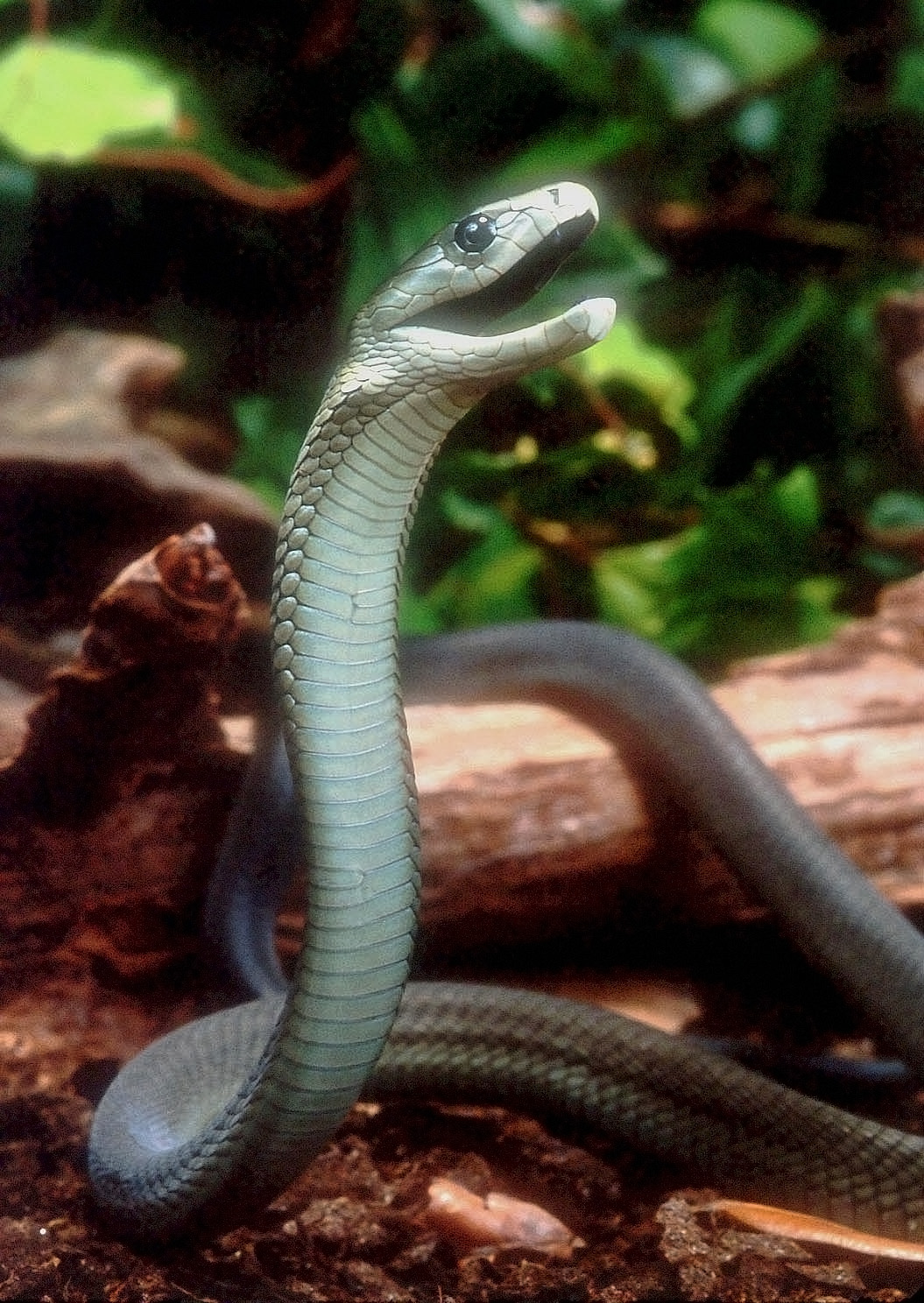
From the bathroom, to be more precise. A black mamba chose the worst moment to enter the house last month, just when students and teachers from St. Constantine's School in Arusha were completing their dinner.

As she walked out of the washroom, one of the teachers casually informed me that there was a snake in the toilet, the guest toilet near the dining room. She was my preferred kind of visitor, not the type who screams at the top of his or her voice at the sight of a snake.

As I cautiously peered behind the toilet door to size up the snake, the lead guide/driver who had accompanied the group of 25 students and three teachers asked me not to kill the snake.

File:Dendroaspis polylepis by Bill Love.jpg
Photo of Black Mamba, Dendroaspis polylepis, used under Creative Commons License. Details at: http://creativecommons.org/licenses/by-sa/3.0/deed.en

I said: "Don't worry. We don't kill snakes in this house", I said to Costa Simba.

Step 1: Using a broomstick, I gently coaxed the snake out of the washroom and it squeezed itself behind the opening under the door hinge.

Although its entire body had shifted past the door opening, it coiled up and lodged itself firmly behind the door with its head facing me. I have seen enough nature documentaries to be aware that it was not in a mood to make friends with anyone. It had taken a hostile position.

Step 2: I placed the broomstick in front of its head with the expectation that it would crawl on and I would be able to pick up the broom and take both snake and broom outside the building to release the snake.

From time to time, Costa kept checking on my progress on removing the snake. At one stage, apparently more concenred about what I would do to the snake then what the snake might do to me, told me: "It's all right, the elders have come to say 'hello.'"

That, he had no need to explain. According to Zanaki tradition a guardian spirit called Muhunda takes many forms: a large baboon, a leopard, or a snake. That tradition forbids humans from harming these creatures.

Simba explained to me that, according to tradition, the 'right' way to remove a snake from the house is to coax it onto a stick and then when it slides onto the stick, to lift both stick and snake and throw it out of a window. Through the window, he insisted, not the door.

That was what I was trying to do but the snake obviously wanted to stay a little longer and was not going away anytime soon. I was still desperately trying to complete step two; he wanted to make sure I followed the instructions well.

At some point I decided the broomstick was too thick for the snake to crawl on to and I changed tactics.

Step 3: I walked out to the garden and cut a thin branch which I assumed would be easier for the snake to relate to.

It was probably unwise to try to coax a snake onto a plastic broomstick in the first place. With the thin branch I tried too much and the snake turned back into the door opening and slid back into the washroom and began slithering up the egde of the door.

In the meantine the teacher who had casually announced the presence of the snake, seeing how much time I was spending trying to remove the snake asked me why I could not just scoop up the snake with a short plastic container. "It seems like a harmless tree snake," she said. No, I explained, this was a black mamba. One of the most poisonous snakes in the world.

She said she wished I did not reveal that; now she was afraid. Now her earlier casual fearless announcement about there being a snake in the bathroom made prefect sense.

Step 3: It was not the gentlest snake removals I had done, but when the snake coiled its upper part on the stick I gently and gradually forced it off the door and wall until most of its body was suspended in the air and it had only one option: to coil itself around the stick that I was holding.

I walked past the dining room and headed for the nearest window.

Step 4: With ample warning to those who are petrified by the presence and sight of snakes, I called ahead to those near the nearest window to open one window.

The closest window was in the kitchen and I am glad I announced my approach because it is not common for me to walk into the kitchen with a snake on a stick. I recall walking into the dining room with a snake in a plastic bag but this was an entirely new experience. Eventually, I stretched my hand through the window and placed the stick on the ground and the snake uncoiled itself and disappeared into the evening.

It was also a different experience from another perspective. I have on a previous occasion removed a snake from the house in a similar manner, but I walked out of the main entrance with the snake on a stick and released it out on the garden. The window tradition was a first for me.

Epilogue: Actually, I am the only one who does not kill snakes at home. Lucky snake.

Posts related to this one:
http://madarakanyerere.blogspot.com/2010/05/snakes-and-chiefs.html
http://madarakanyerere.blogspot.com/2011/09/my-version-of-year-in-review-january2.html
http://madarakanyerere.blogspot.com/2012/04/world-story-telling-day.html
http://madarakanyerere.blogspot.com/2009/01/up-to-my-neck-in-snakes.html
http://madarakanyerere.blogspot.com/2011/09/my-version-of-year-2010-in-review-march.html

Saturday, 10 November 2012

Here's yet another CV update from Prof. Sospeter Muhongo

Early this month, Prof. Sospeter Muhongo was in the United States at the invitation of the Geological Society of America (GSA) for his appointment as Honorary Fellow to the GSA. This updated CV includes the recent addition to his accomplishments and also expands his other contributions in the field of geology and mineral maps.

If you need help writing your CV, you might want to look at author Corinne Mills' top-rated book You're Hired!: How to write a brilliant CV which is available through Amazon.
***************************************
Prof. Sospeter Muhongo, a distinguished scholar, is the Minister of Energy and Minerals of the United Republic of Tanzania and a Nominated Member of Parliament. He is, "Officier, Ordre des Palmes Académiques", an Honorary Fellow of the Geological Society of America (HonFGSA), an Honorary Fellow of the Geological Society of London (HonFGS), an Honorary Research Fellow of the Chinese Academy of Geological Sciences (HonFCAGS), a Fellow of the Academy of Sciences for the Developing World (FTWAS), a Fellow of the Geological Society of Africa (FGSAf), a Fellow of the African Academy of Sciences (FAAS), and a Fellow of Tanzania Academy of Sciences (FTAAS). He is a fellow of ten highly learned professional societies. He is the first recipient (2004) of Prof. Robert Shackleton (UK) Award for Outstanding Research on the Precambrian Geology of Africa. He is the Vice President of the Commission of the Geological Map of the World (CGMW). He is a Full Professor of the University of Dar es Salaam, Tanzania, and an Honorary Professor of Geology at the University of Pretoria, South Africa.

Prof. Muhongo was the Chair of the Jury for the African Union (AU) Kwame Nkrumah Scientific Awards - Continental Awards for Outstanding Scientists 2011 Edition. He is a member of the Executive Board of the African Inter-Parliamentary Forum on Science, Technology and Innovation (AIPF-STI).

Mama Maria Nyerere with
Prof. Dr. Sospeter Muhongo (Officier, Ordre des Palmes Académiques), FGSAf, FAAS, FASI, FASSAf, FTAAS, FGIGE, FTWAS, HonFCAGS, HonFGSA, HonFGS, CGeol, EurGeol
 during his visit to Butiama.
He is effectively involved in various high level regional (Africa) and global science, technology and innovation strategic policy processes (Africa-Europe STI partnerships). He is a Member of the International Experts Group (Global Science Forum) of OECD and has occupied numerous important national, regional, and international professional positions dealing with STI, earth resources, science policy, and science diplomacy. Prof. Muhongo was nominated by his country to be a candidate (2009) for the post of the Director General of UNESCO.

He is Editor-in-Chief of the Journal of African Earth Sciences (Elsevier), Associate Editor of Precambrian Research (Elsevier), and a member of several editorial boards of science journals and bulletins. Prof. Muhongo is the Senior Editor of the published book (2009) on, "Science, Technology and Innovation for Socio-Economic Development: Success Stories from Africa."

Prof. Muhongo was the President of the Geological Society of Africa (1995 - 2001). He was the founding Regional Director (2005 - 2010) of the ICSU Regional Office for Africa, Pretoria, South Africa. He was the Chairperson of the UNESCO-IUGS-IGCP Scientific Board of the International Geoscience Programme (2004 - 2008), and the Chair (2007 - 2010) of the Science Programme Committee (SPC) of the UN-proclaimed International Year of Planet Earth (IYPE). He is a Chartered Geologist and an active member of numerous professional societies including the Geological Society of America, the Geological Society of London, the Royal Commonwealth Society, Geologische Vereinigung (Germany), Geological Society of Africa, Geological Society of South Africa, and the Tanzania Geological Society.

He was the Chairman (1995 - 2005) of the Board of Directors of the State Mining Corporation (STAMICO), Tanzania; and was the Head (1997 - 2000) of the Department of Geology, University of Dar es Salaam. Prof. Muhongo was the Chairman (2002) of the Tanzania Government's Commission of Inquiry on the deadliest Merelani Tanzanite mine's accident.

Prof. Muhongo is mentoring young scientists, engineers, and technologists around the world. He is the Patron of the University of Dar es Salaam Geological Association of Students (UDGAS), a Patron of the National Young Earth Scientists Network (YES, Tanzania), and is an Advisor to the Global Young Earth Scientists Network (YES, Global).

Prof. Muhongo has published over 200 research papers in international journals of high impact factors. He has co-authored widely used geological and mineral maps of Africa, East Africa and Tanzania. He has co-authored widely used geological and mineral maps of Africa, East Africa and Tanzania. He has delivered more than 300 invited keynote speeches around the world at international conferences. He has undertaken over 100 contracted scientific research projects, and consultancy services in the mineral industry, environmental issues and STI policy matters. Prof. Muhongo has been on many STI review/evaluation panels and advisory boards for both national and international institutions and organizations. He has been an External Examiner/Referee for numerous universities, i.e. examinations moderator and academic staff referee/evaluator (e.g. candidates for professorship positions). Over the past two decades, Prof. Muhongo has co-organized over 100 expert group meetings and international earth sciences, STI and science policy conferences, including those on "Science with Africa (Rapporteur-General)" which are hosted by the United Nations Economic Commission for Africa (UNECA), the African Union Commission (AUC) and their partners.

Prof. Muhongo has developed a special interest in the application of STI for sustainable growth and socio-economic development of the global society. Prof. Muhongo, who is the recipient of numerous scholarly and professional awards, recognitions, grants, and fellowships, studied geology at the Universities of Dar es Salaam (Tanzania), and GÓ§ttingen (Germany). He graduated with Dr.rer.nat. degree from the Technical University of Berlin, Germany. Prof. Muhongo is fluent in Kiswahili, English, German and French (basic).

Posts related to this one:
http://madarakanyerere.blogspot.com/2012/09/prof-sospeter-muhongo-gets-more.html
http://madarakanyerere.blogspot.com/2012/05/prof-sospeter-muhongo-and-janet-mbene.html
http://madarakanyerere.blogspot.com/2010/08/prof-sospeter-muhongo-has-returned-to.html
http://madarakanyerere.blogspot.com/2010/09/africa-gets-bad-press-even-in-fiction.html 

Friday, 9 November 2012

Visitors to Butiama: Kingunge Ngombale Mwiru

Over the years, thousands of visitors have visited Butiama including prominent political figures. Many of Butiama's visitors decide to visit Butiama in recognition of the lasting social and political legacy of one of Butiama's famous residents, the late Mwalimu Julius Kambarage Nyerere, who died on 14th October 1999 and was buried in Butiama on 23th October 1999.

Mzee Kingunge Ngombale Mwiru, being one of the politicians who served under the administration of President Nyerere, would have visited Butiama many times during his tenure in his various capacities within the ruling Chama cha Mapinduzi (CCM) party and in government.


This photo was taken during his last visit to Butiama several years ago when he attended the funeral of Josephat Kiboko Nyerere, Mwalimu Nyerere's brother.

If past records are reliable there should be an increase in the number of visitors to Butiama as we draw closer to the elections in 2015.

Monday, 5 November 2012

Political party CCJ has resurfaced as CCK

Remember the short-lived political party, Chama cha Jamii (CCJ)? Well, they are back in politics, now re-named Chama cha Kijamii (CCK).

A press report last week reported changes in CCK's leadership. Among the changes, the former secretary general, Renatus Gregory Muabhi, will be re-assigned other duties. He was the founding secretary general in CCJ, together with the then chairperson Richard Kiyabo, who abandoned CCJ after it became apparent that the party would not meet the registration requirements before the 2010 general elections.

As part of their launch campaign with CCJ, Kiyabo and Muabhi traveled around the country to drum up support for their party and promised mass defections from the ruling party Chama cha Mapinduzi's parliamentarians. They traveled as far as Butiama. When the count was concluded, only one MP defected.


During a visit to Butiama in March 2010, Renatus Muabhi (L), and Richard Kiyabo (R) lay a wreath at the grave of Tanzania's founding president, Mwalimu Julius Nyerere

Maybe this time Tanzanians might have the opportunity to assess the policies of another political party in the next general elections in 2015.

Posts related to this one:
http://madarakanyerere.blogspot.com/2010/03/visitors-to-butiama-leaders-of-new.html
http://madarakanyerere.blogspot.com/2010/09/richard-kiyabo-from-ccm-to-ccm.html
http://madarakanyerere.blogspot.com/2011/09/march-18-2010-at-end-of-january-2010.html

Tuesday, 21 August 2012

My version of the year 2011 in review: 23 October

I captured this image of old rock art, located at Mwitongo, Butiama on a granite rock face.
The lower left side shows two distinct animal figures, perhaps antelopes or giraffes. A circular image in the mid lower section could be a representation of the sun or moon.

A lecturer from the Archeology Unit of the University of Dar es Salaam who has seen these images has pointed out that they could be as old as 20,000 years.

Other posts in this 2011 review series:
http://madarakanyerere.blogspot.com/2012/08/my-version-of-year-2011-in-review-22_20.html
http://madarakanyerere.blogspot.com/2012/08/my-version-of-year-2011-in-review-25_22.html

Monday, 20 August 2012

My version of the year 2011 in review: 22 October

Tour operators from Arusha and one from Rwanda, accompanied by two travel writers, arrived at Butiama in the afternoon during their familiarization tour of the Lake Zone as part of a tour organized by tourism stakeholders in Mwanza and Mara region to promote their regions' tourist attractions.
At the Mwalimu Julius K. Nyerere Museum, Bwire, one of the museum's guide, provided a brief introduction before they began their tour of the museum, Mwalimu Nyerere's mausoleum, and watching a performance of the Egumba Dance group.

Other posts in this 2011 review series:
http://madarakanyerere.blogspot.com/2012/08/my-version-of-year-2011-in-review-16.html
http://madarakanyerere.blogspot.com/2012/08/my-version-of-year-2011-in-review-23_21.html

Wednesday, 15 August 2012

View from the top of Mt. Mtuzu, Butiama, Tanzania.


A scenic view near Butiama, at the end of an hour-long trek which I have used frequently when preparing myself for the next Mt. Kilimanjaro climb.

Post related to this one:
http://madarakanyerere.blogspot.com/2009/01/visitors-to-butiama.html

Friday, 3 August 2012

Animal footprint at Butiama

Less than ten years ago a dog walked on a pathway at Butiama where workmen had just poured a concrete mix. The single paw imprint of the dog appears on a stretch of concrete walkway that is about 40 metres long.

I believe the dog was chased away when someone saw it stepping on the wet cement and that would explain why there is only one footprint.

Fast forward to a few million years into the future and the paw imprint is covered by a layer of earth and to a further few million years into the future and a palaentologist or archeologist discovers the footprint that had remained buried for millions of years.

Barring someone unearthing this blog post several million years from now, I am curious to know what scientific revelation could emerge together with the discovery of a single footprint of a dog on a concrete surface.

Post related to this one:
http://madarakanyerere.blogspot.com/2012/08/my-version-of-year-2011-in-review-23_21.html

Saturday, 28 July 2012

My version of the year 2011 in review: 7 September

I have excellent plans for exercising ahead of climbing Mt. Kilimanjaro. And an absolutely poor record of implementing those plans.

Less than two weeks ahead of commencing my third climb of Africa's highest peak, I decided I should put some of those plans into motion - more than two months too late. I dusted my appropriately named mountain bike and headed out south of Butiama.

Posts related to this one:
http://madarakanyerere.blogspot.com/2010/03/letter-from-butiama-peace-march.html
http://madarakanyerere.blogspot.com/2012/03/mwalimu-nyereremt-kilimanjaro-charity_25.html
http://madarakanyerere.blogspot.com/2008/10/why-i-quit-smoking-my-kilimanjaro-climb_19.html

Other posts in this 2011 review series:
http://madarakanyerere.blogspot.com/2012/07/my-version-of-year-2011-in-review-23_28.html
http://madarakanyerere.blogspot.com/2012/08/my-version-of-year-2011-in-review-18.html